

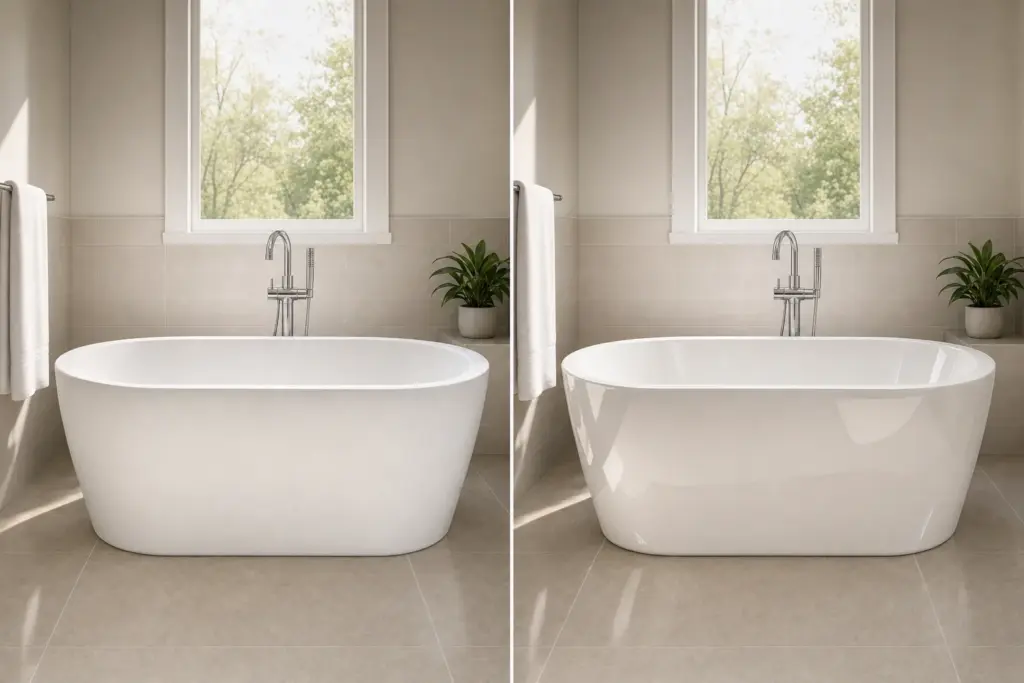
When you’re shopping for a new bathtub or evaluating the one you have, the material matters. Acrylic and porcelain are the two most common options for residential bathrooms in the Denver area, and while they might look similar at first glance, they have very different lifespans, maintenance needs, and costs. Understanding the differences between acrylic vs porcelain bathtubs will help you make a smarter decision for your home.
Both materials have loyal advocates, and both can work well in the right situation. The key is knowing what each one offers, where each one falls short, and which one fits your needs and budget.
Porcelain Bathtubs: Classic Durability
Porcelain bathtubs have been around for over a century, and they remain popular for good reason. Porcelain is created by firing clay and minerals at extremely high temperatures, resulting in a hard, non-porous surface that’s resistant to staining and bacterial growth.
One major advantage of porcelain is its longevity. With proper care, a porcelain bathtub can last 20 to 30 years or longer. The glazed surface is incredibly hard and resists chipping and scratching better than acrylic. Porcelain also maintains its color well and doesn’t fade as easily when exposed to sunlight or harsh cleaners.
However, porcelain does have weaknesses. While the surface itself is hard, porcelain bathtubs are brittle. A heavy impact, a dropped tool, or even a severe temperature shock can cause cracks that are extremely difficult to repair. Once the glaze is chipped or cracked, water can seep into the underlying material, leading to deterioration. Porcelain is also heavier than acrylic, which can make installation more challenging.
Acrylic Bathtubs: Affordable and Practical
Acrylic is a synthetic material made from petroleum-based polymers. It’s molded into shape, making it lighter and easier to install than porcelain. Acrylic bathtubs are significantly cheaper upfront, which is why they’re the default choice in many new construction homes and apartment buildings.
Acrylic is durable in its own right, typically lasting 10 to 15 years before showing significant wear. It’s also more forgiving than porcelain when it comes to impact damage. If you drop something heavy on an acrylic tub, it’s less likely to crack. Acrylic is warmer to the touch than porcelain, which many people find more comfortable. It also insulates heat better, so your bathwater stays warm longer.
The downside is that acrylic is softer and more porous than porcelain. It scratches and scuffs more easily, especially with harsh scrubbing or abrasive cleaners. Acrylic can discolor over time, particularly in areas exposed to standing water or frequent use. Hard water deposits and soap residue are more visible on acrylic. The finish can also become dull after years of cleaning.
Side-by-Side Comparison
| Attribute | Porcelain | Acrylic |
|---|---|---|
| Lifespan | 20-30+ years | 10-15 years |
| Cost | Higher | Lower |
| Durability to impact | Brittle, prone to cracks | More forgiving |
| Surface resistance | Very hard, scratch-resistant | Softer, more prone to scratching |
| Stain resistance | Excellent | Fair to good |
| Warmth to touch | Cold | Warm |
| Heat retention | Poor | Good |
| Repair difficulty | Very difficult | Can be refinished |
| Weight | Heavy | Light |
| Installation ease | Difficult | Easy |
Which Material Actually Lasts Longer?
On paper, porcelain wins the longevity contest. A high-quality porcelain bathtub can easily outlast an acrylic one by 10 years or more. But real-world durability depends on how you use and maintain your tub.
If you treat a porcelain tub with respect and avoid impact damage, it will last significantly longer. If you’re rough on a bathtub or live in an area with hard water, acrylic’s stain resistance might not hold up as well despite its shorter theoretical lifespan.
There’s also a middle ground worth considering. If your porcelain or acrylic bathtub is showing age but the structure is still sound, you don’t have to replace it. DR Refinishing specializes in refinishing both porcelain and acrylic bathtubs with an industrial-grade finish that makes them look brand new. This process can extend the life of an existing tub by years and costs a fraction of a full replacement.
Maintenance and Care Make a Difference
How long your bathtub actually lasts depends heavily on maintenance. Porcelain requires less frequent cleaning to maintain its appearance, but it needs gentle care to avoid cracks. Acrylic needs more regular maintenance to prevent staining and dullness, but it’s more forgiving to clean.
Key maintenance tips for either material include:
- Clean spills and stains promptly
- Use soft cloths and non-abrasive cleaners
- Avoid harsh chemicals that can damage both surfaces
- Dry the tub after bathing to reduce hard water spots on acrylic
- Address small chips or cracks immediately to prevent water damage
The Cost Factor
Upfront cost is where these materials differ dramatically. A new acrylic bathtub typically runs $300 to $800, while a quality porcelain tub costs $800 to $2,000 or more. Installation adds another $1,000 to $3,000 to either option.
When you factor in the lifespan, porcelain becomes a better long-term value if you keep it in good condition. But if you’re in a rental, planning to move soon, or simply want to refresh your bathroom without a major expense, acrylic makes more financial sense.
For homeowners in the Denver metro area who don’t want to pay for a full bathtub replacement at all, bathtub refinishing is an even smarter choice. You can get a like-new finish on your existing porcelain, acrylic, or other materials in a single visit for a fraction of the cost of replacement.
Making Your Choice
Choose porcelain if you want maximum longevity and can commit to gentle handling. Choose acrylic if affordability and ease of installation matter more. And if your existing tub is worn, stained, or dated but structurally sound, consider refinishing before you think about replacement.
Whichever material you have now, a professional refinishing service from DR Refinishing can breathe new life into it. Whether your bathtub is porcelain, acrylic, ceramic, tile, fiberglass, or laminate, we can restore it with an industrial-grade finish backed by a written warranty. Serving the greater Denver area, we complete most refinishing jobs in a single visit with no mess and no construction disruption.
If you’re ready to decide between repair, refinishing, or replacement, contact DR Refinishing for a free quote today.