

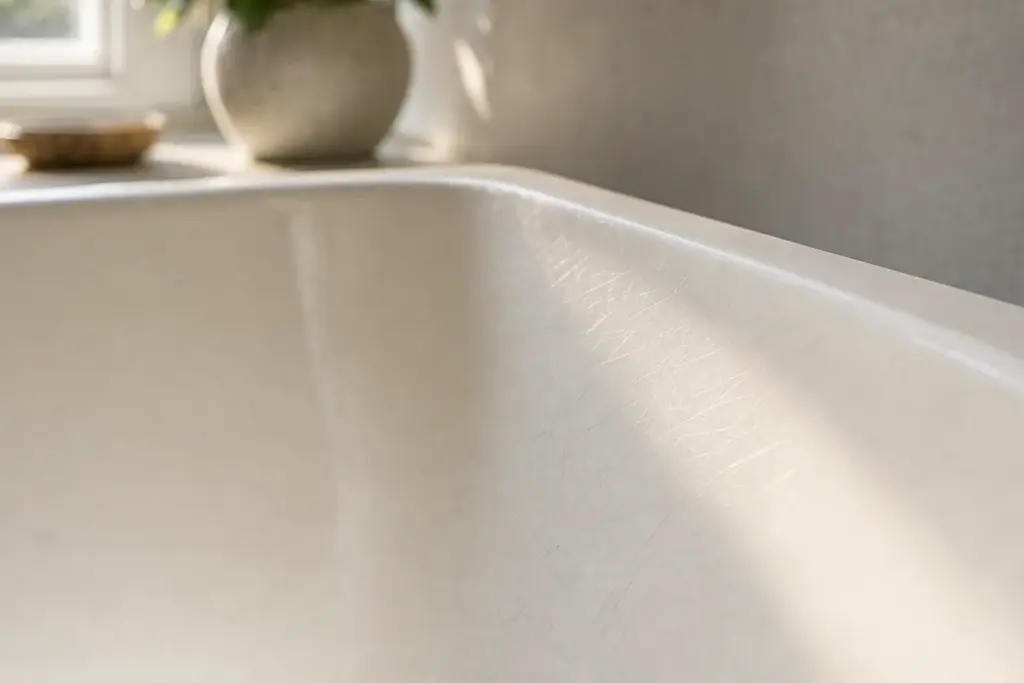
Porcelain bathtubs are durable and attractive, but they’re not immune to damage. Scratches, scuffs, and surface wear can happen quickly, especially in households with kids, pets, or frequent use. If your porcelain tub is showing signs of damage, you have several options to restore it. Understanding the severity of the scratches and knowing which repair method works best will help you make the right choice for your situation.
Understanding Porcelain Bathtub Scratches
Scraches on porcelain tubs come in two main categories: surface-level and deep. Surface-level scratches affect only the glossy coating, while deep scratches penetrate into the porcelain itself. The depth of the damage determines which repair approach will work best.
Surface scratches are usually light marks that don’t catch your fingernail when you run it over them. Deep scratches are more serious and can expose the underlying material. Both types can make your bathtub look older and less attractive, even if the tub is otherwise in good condition.
Light Scratches: DIY Touch-Up Options
If your porcelain tub repair involves only minor surface scratches, a few DIY approaches might work:
- Porcelain touch-up markers or paint pens: These are designed specifically for porcelain and come in white and other common colors. They fill in light scratches and restore the appearance quickly.
- Baking soda paste: A gentle abrasive that can buff out light scratches without damaging the porcelain. Mix baking soda with water and apply with a soft cloth.
- Porcelain repair kits: Some hardware stores sell small kits that include filler and polish for minor porcelain damage.
- Polishing compounds: These can help restore shine to scratched areas and make light marks less noticeable.
These methods work best when the scratch doesn’t go deep into the material. If the scratch is visible but barely tangible, a touch-up approach may be enough to make it disappear.
Deep Scratches and Structural Damage
When scratches go deeper and expose the underlying porcelain or expose the base material beneath the glaze, DIY fixes usually won’t last. Deep damage requires a more serious approach.
For deep scratches that compromise the integrity of the tub’s finish, you have two primary options: repair or refinishing.
Spot repair involves filling the damaged area with porcelain epoxy or specialized repair compound. This method works for isolated deep scratches but may still be visible, especially if the color matching isn’t perfect.
Full refinishing is the most effective solution for multiple scratches, severe damage, or when you want the tub to look completely restored. Professional porcelain tub repair through refinishing resurfaces the entire tub with an industrial-grade finish. This approach eliminates all visible scratches and gives your bathtub a like-new appearance.
When to Consider Professional Refinishing
If your porcelain bathtub has extensive scratches, chips, or a worn finish, professional refinishing is often the smartest choice. DR Refinishing specializes in bathtub refinishing and can transform even heavily damaged tubs in a single visit, restoring them to showroom quality without the cost and disruption of full replacement.
Refinishing works on porcelain, ceramic, fiberglass, tile, and other common bathtub materials. The process involves cleaning, repairing any chips or deep damage, and applying a durable, industrial-grade finish. The result is a scratch-resistant surface that looks brand new and lasts for years.
Professional refinishing is especially worth considering if you’re seeing multiple signs of wear: scratches combined with stains, a dull finish, or discoloration that makes the tub look dated.
Cost and Time Comparison
DIY touch-up methods are cheap, usually costing between 10 and 50 dollars, but they work only on minor scratches. If the damage is more extensive, you’re looking at either:
- Spot repair by a professional: A few hundred dollars, but may not fully hide the damage or blend seamlessly.
- Full bathtub replacement: 3,000 to 20,000+ dollars plus weeks of construction and disruption.
- Professional refinishing: A fraction of replacement cost, completed in a single visit, and backed by a written warranty.
For homeowners in the Denver area, professional refinishing offers the fastest, most affordable path to a beautiful bathroom without the mess and expense of remodeling.
Prevention and Future Care
Once you’ve fixed your scratches, keeping your porcelain tub in good condition requires basic maintenance:
- Use a soft cloth or sponge when cleaning, not abrasive scrubbers.
- Clean spills promptly to prevent staining.
- Avoid dropping heavy objects in or around the tub.
- Use bath mats to reduce slipping and minimize impact.
If you’ve had your tub professionally refinished, proper care becomes even more important. The new finish is durable but performs best when treated gently.
Making Your Decision
The right porcelain tub repair method depends on the severity of your scratches and your budget. Light scratches may respond well to a touch-up marker or gentle polish. Deeper damage or multiple scratches typically require professional attention.
If you’re in the Denver metro area and your porcelain bathtub needs more than a DIY fix, DR Refinishing can restore it to like-new condition in just a few hours. You’ll get an industrial-grade finish, no construction mess, and a written warranty backing the work. Contact DR Refinishing today for a free quote and see how affordable a beautiful bathroom can be.