

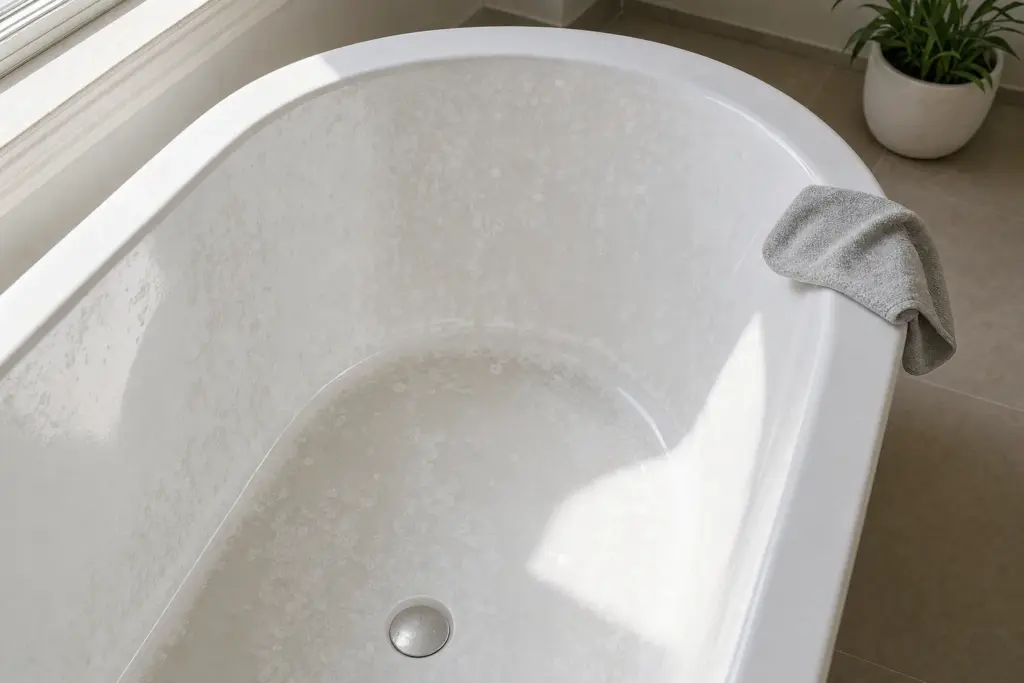
Hard water stains on your bathtub are annoying, stubborn, and they make even a clean bathroom look dingy. If you live in the Denver metro area, you know hard water is a real problem. Those white, chalky, or yellowish deposits build up over time, and ordinary cleaning doesn’t always cut it. The good news is that you have options, from simple DIY solutions to professional restoration.
Understanding Hard Water Stains
Hard water contains high levels of minerals, primarily calcium and magnesium. When water sits on your bathtub surface or evaporates, these minerals are left behind as deposits. Over time, these stains accumulate and become increasingly difficult to remove.
The mineral content varies depending on your water supply, but Denver’s water is notably hard. This means Denver-area homeowners are especially vulnerable to buildup on porcelain, fiberglass, ceramic, tile, and other bathroom surfaces. Hard water stains are purely cosmetic, but they can make your bathroom look neglected even when it’s actually clean.
Try These DIY Cleaning Methods First
Before investing in professional help, try these common household solutions:
White Vinegar
White vinegar is acidic and dissolves mineral deposits. Spray full-strength vinegar on the stains, let it sit for 15-30 minutes, then scrub with a soft sponge and rinse thoroughly. For stubborn stains, repeat the process or let the vinegar sit longer.
Baking Soda Paste
Mix baking soda with water to create a thick paste. Apply it directly to the stains, let it sit for 10-15 minutes, then gently scrub and rinse. This method works well on ceramic and tile surfaces.
Commercial Hard Water Stain Removers
Products specifically designed to target mineral deposits are available at most hardware stores. Always follow the manufacturer’s instructions and ventilate the bathroom properly.
Lemon Juice
The citric acid in lemon juice acts similarly to vinegar. Cut a lemon in half and rub it directly on the stains, or spray bottled lemon juice on affected areas. Let it sit for several minutes before scrubbing.
CLR or Similar Products
Chemical-based removers can tackle tough stains but require careful handling. These products are powerful and should not be mixed with other cleaners. Always wear gloves and ensure good ventilation.
Start with the gentler options like vinegar or baking soda. If those don’t work after a few attempts, move on to stronger commercial products.
Prevention Tips
Once you’ve cleaned your bathtub, you can slow down future stain buildup:
- Squeegee your tub after each use to remove standing water
- Wipe down surfaces with a soft cloth or microfiber towel
- Use a daily shower spray to prevent mineral accumulation
- Install a water softener if hard water is a persistent problem throughout your home
- Ventilate your bathroom well to reduce moisture and allow surfaces to dry faster
These habits won’t eliminate hard water stains entirely, but they can significantly reduce how quickly they return.
When DIY Cleaning Isn’t Enough
Sometimes hard water stains become so embedded in your bathtub’s finish that scrubbing alone won’t remove them. If your tub is heavily stained, scratched, or showing signs of wear beyond surface discoloration, DIY cleaning may not deliver the results you want.
This is where professional bathtub refinishing comes in. Rather than replacing your entire tub, refinishing resurfaces it with an industrial-grade coating that not only removes the appearance of stains but also restores shine and durability. The process is completed in a single visit, with no construction mess or weeks of disruption.
DR Refinishing specializes in restoring porcelain, fiberglass, ceramic, tile, and other bathroom materials throughout the Denver area. We apply a durable finish that looks brand new and is backed by a written warranty. We can also custom color your tub if you want to update your bathroom’s look while you’re at it.
How Professional Refinishing Differs From Cleaning
Cleaning removes surface stains, but it doesn’t address underlying wear, discoloration, or damage to the tub’s original finish. If your bathtub has deep stains, chips, cracks, or a dull, worn appearance, cleaning alone won’t restore it to like-new condition.
Refinishing is a permanent solution. Instead of repeatedly cleaning and fighting stains, you get a fresh, glossy industrial-grade finish that resists staining and is far easier to maintain going forward. The new finish is non-porous, so minerals have a harder time bonding to the surface, making future stains easier to clean.
Unlike a full bathroom remodel, refinishing costs a fraction of the price and takes just hours instead of weeks. For Denver homeowners who want their bathroom to look great without breaking the bank or dealing with months of construction, it’s an ideal option.
Making Your Decision
Start by assessing the severity of your hard water stains. Light to moderate stains that respond to vinegar, baking soda, or commercial cleaners are worth tackling yourself, especially if prevention habits will help. But if your stains are deep, widespread, or your tub is showing other signs of age and wear, professional refinishing delivers guaranteed results with minimal disruption.
Whichever route you choose, the key is addressing the problem before stains become too ingrained. Regular maintenance and prompt treatment of new stains will keep your bathtub looking fresh for longer.