

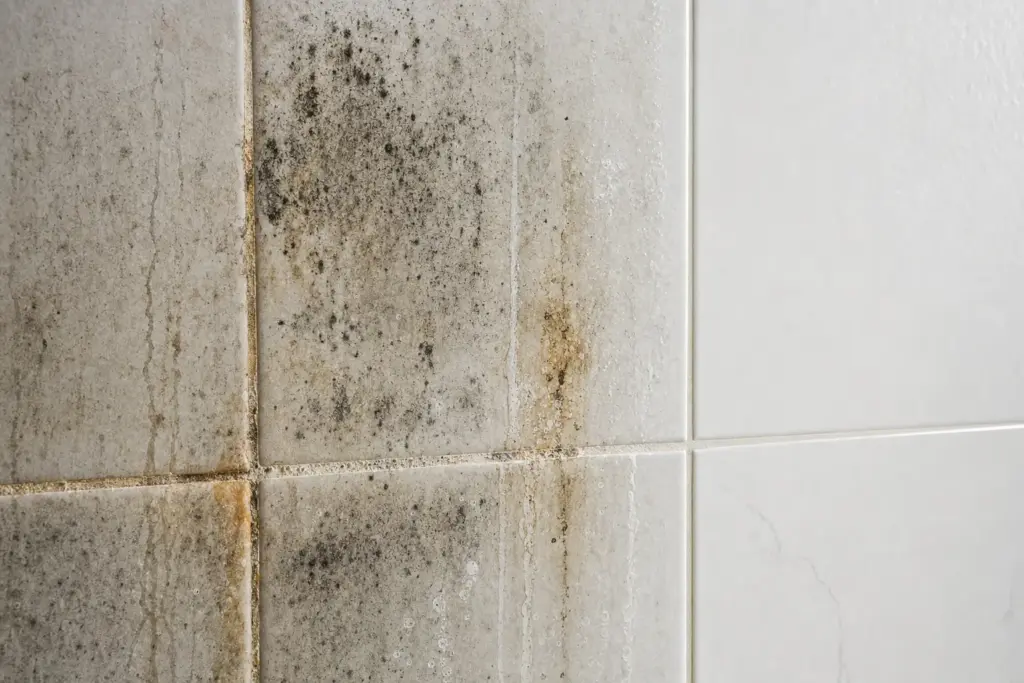
Shower tile discoloration is one of the most frustrating bathroom problems. Your tiles looked clean and bright when they were new, but over time they’ve developed dark spots, rust streaks, or a dull, dingy appearance that no amount of scrubbing seems to fix. The good news: you don’t need to replace all your tile to restore your bathroom’s look.
Understanding what causes these stains and discoloration is the first step toward fixing them. Some issues can be resolved with cleaning, while others require a more permanent solution. Let’s walk through the common culprits and what you can do about them.
Common Causes of Shower Tile Discoloration
Tile discoloration doesn’t happen by accident. Several factors contribute to staining and dulling, and knowing which one you’re dealing with helps you choose the right fix.
Mold and Mildew: Dark black or greenish spots are usually mold or mildew, which thrive in warm, damp environments. Bathrooms are perfect breeding grounds because moisture gets trapped in grout lines and porous surfaces.
Soap Scum and Hard Water Deposits: These white, cloudy, or chalky buildup layers form when soap combines with mineral-heavy water. Hard water is especially problematic because it leaves behind calcium and magnesium deposits that accumulate over time.
Rust Stains: Orange or brown streaks often come from metal fixtures, showerheads, or iron pipes exposed to moisture. Rust can also develop in the grout itself if it contains iron particles.
Lime Scale: Similar to hard water deposits, lime scale is a chalky white or yellowish buildup that hardens over time. It’s particularly stubborn on tile surfaces and grout lines.
General Dirt and Body Oils: Daily use naturally deposits skin cells, body oils, and dirt onto tiles. These accumulate in grout lines and on porous surfaces, creating a dingy gray or brown patina.
Cleaning Solutions for Fresh Discoloration
If your tile discoloration is relatively new or light, aggressive cleaning may restore the original appearance. Before investing in larger solutions, try these approaches.
For soap scum and hard water deposits, white vinegar is highly effective. Spray it directly onto the affected tiles, let it sit for 15 to 30 minutes, and scrub with a stiff brush. The acidity dissolves mineral deposits without harsh chemicals.
Mold and mildew respond well to a mixture of bleach and water (one part bleach to ten parts water). Apply the solution, allow it to sit for 10 minutes, and scrub thoroughly. Always ventilate the bathroom well when using bleach. For gentler mold prevention, hydrogen peroxide or tea tree oil solutions work on light growth.
For rust stains, a paste made from baking soda and lemon juice can help. Apply it to the stain, let it sit, and scrub. For stubborn rust, commercial rust removers designed for bathrooms may be necessary.
Regular maintenance prevents new discoloration from taking hold. Squeegee your shower after each use to minimize moisture, keep the area well-ventilated with a exhaust fan running during and 20 minutes after showers, and wipe down tile surfaces weekly to prevent buildup.
When Cleaning Isn’t Enough
Sometimes discoloration is too deep, too extensive, or too stubborn to clean away. If you’ve scrubbed, treated, and cleaned but the stains remain, you’re looking at permanent damage to the tile surface itself.
Deep-set stains, pitting, and surface etching from years of mineral deposits can’t be removed without damaging the tile. Heavily discolored grout often can’t be bleached back to white without replacement. Mold growing beneath the surface or in grout joints will keep returning unless the substrate is addressed.
At this point, you have two traditional options: replace the tile (expensive and time-consuming) or live with the discoloration. But there’s a third option that many Denver-area homeowners don’t know about.
Professional Tile Refinishing: A Better Alternative
Tile refinishing resurfaces your existing tile with an industrial-grade coating that restores the look and feel of new tile without removal or replacement. DR Refinishing specializes in this service, covering all your bathroom surfaces in a single visit.
The refinishing process works on porcelain, ceramic, fiberglass, laminate, and other materials. It delivers a fresh, bright finish that covers discoloration, stains, and dull surfaces. The coating is durable, easy to clean, and backed by a written warranty. Best of all, it costs a fraction of what tile replacement would run and completes in a few hours rather than weeks.
With custom color options available, you can even refresh your bathroom’s entire look while solving the discoloration problem. Whether you want to match your existing tile or try something new, professional refinishing gives you control over the final appearance.
Preventing Future Discoloration
Once you’ve addressed your tile discoloration, protecting your newly refinished surfaces or newly cleaned tile keeps them looking their best longer.
Improve bathroom ventilation. A working exhaust fan that runs during and after showers dramatically reduces moisture and mold risk. If your bathroom doesn’t have adequate ventilation, consider upgrading.
Use a water softener if you have hard water. It eliminates mineral deposits at the source rather than fighting them constantly on your tiles.
Keep soap and shampoo bottles off the tile surface. They trap moisture underneath and create perfect conditions for mold to grow.
Wipe down your shower after use. A quick squeegee or towel dry removes standing water where minerals can deposit and mold can start.
Clean your grout regularly. Grout is porous and traps moisture and dirt, making it a mold magnet. Weekly cleaning with a soft brush and mild cleaner keeps it fresh.
Consider a water filter on your showerhead. Some filters reduce mineral content, which slows hard water staining and scale buildup.
Take Action Now
Shower tile discoloration is fixable. Whether you’re dealing with light stains that respond to cleaning or deep discoloration that requires professional help, solutions exist that won’t break your budget or disrupt your home.
If cleaning hasn’t solved your problem and you’re in the Denver area, a free quote for professional tile refinishing might be exactly what you need. DR Refinishing can transform dingy, discolored tile into a bright, clean bathroom surface in a single day.